Description
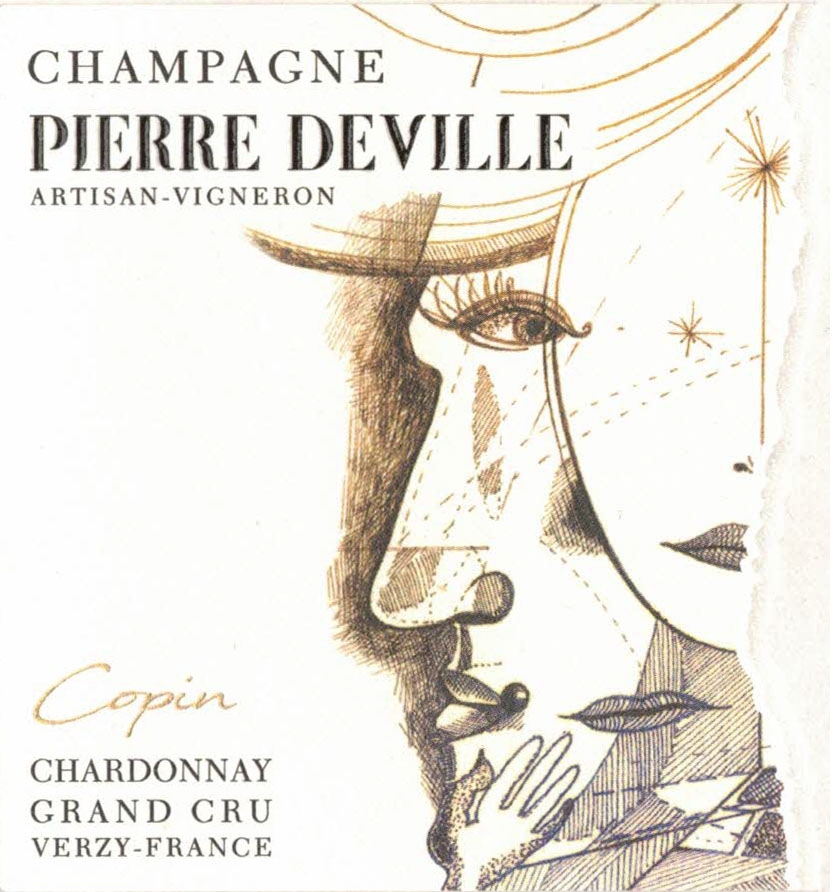
The “Copin” is Alban Corbeaux’s most surprising wine in the Pierre Deville lineup. Verzy is Pinot Noir country, so producing a blanc de blancs here is something of a statement. But the chalk-rich soils of the Montagne de Reims give Chardonnay a completely different character than you’d find on the Côte des Blancs: tighter, more mineral, with a stony tension that runs through every sip.
“Copin” offers beautiful aromatic clarity — citrus peel, white flowers, and a whisper of cream from gentle oak aging — while the palate is long, chiseled, and precise. True to Alban’s philosophy, it’s fermented with indigenous yeasts, kept to minimal dosage, and finished with delicate bubbles.
- Terroir : 100% Verzy Grand cru
- Assemblage : 100% Chardonnay
- Lieux dits : Les Epinettes « 1970 » Les Alouettes « 1976 »
- Soil: Limestone on chalk
- Viticulture: Organic (in the process of certification) and biodynamic practices
- Vinification: 100% in oak barrels
- Natural alcoholic fermentation with indigenous yeasts
- Complete malolactic fermentation
- Dosage : Extra brut
- Production : 1300 bottles
About Champagne Pierre Deville
Independent spirit of a fourth-generation grower, crafting precise Champagnes from Verzy
Nestled in the Grand Cru village of Verzy at the heart of the Montagne de Reims, Champagne Pierre Deville is a small, family-owned estate now in its fourth generation. When Alban Corbeaux took over in 2017, he had a clear vision: to make Champagne that feels deeply personal — rooted in place, shaped by hand, and unmistakably his own. Working with just five hectares of vines, Alban draws on Verzy’s signature Pinot Noir alongside Chardonnay to craft wines that speak directly to where they come from. The Pierre Deville name itself honors that legacy — it was Alban’s great-grandfather who first broke away from the big houses in 1963 to bottle Champagne under his own label.
Alban has since taken that independent spirit further, transitioning to biodynamic and organic farming and vinifying as naturally as possible. Fermented with indigenous yeasts and produced with minimal sulfur, his Champagnes reflect a thoroughly modern sensibility: low or no dosage, single-vintage expressions, and impossibly fine bubbles. The result is a collection of wines that feel both precise and alive — the kind of grower Champagne that American wine lovers are increasingly seeking out, made by someone who has spent years quietly defining his own style, vintage by vintage.