Marsannay sits at the northern gateway to the Côte de Nuits — the first appellation south of Dijon, where the famous limestone slope begins and the wines start to say something specific about where they come from. It is historically overshadowed by the more celebrated villages to the south. Gevrey-Chambertin is twenty minutes down the road. Morey-Saint-Denis, Chambolle-Musigny, and Vosne-Romanée follow in quick succession. Against that competition, Marsannay rarely gets the attention it deserves but that is beginning to change.
A brief history
Marsannay’s winemaking history goes back to the 7th century. In 644 AD the Duke of Amalgaire bequeathed the vineyards here to the monks of the Abbey of Bèze — the same Cistercian order that would later enclose Clos Vougeot and farm much of the Côte de Nuits. The Clos du Roy lieu-dit, now one of the three sites under evaluation for Premier Cru classification, appears in records from the 13th century as an enclosed vineyard belonging to the Dukes of Burgundy. The medieval history of this land is as distinguished as any on the Côte de Nuits.
The 19th century was less kind. Marsannay producers largely ripped out their Pinot Noir vines and replanted with Gamay to satisfy the market of neighbouring Dijon — a pragmatic decision that damaged the appellation’s reputation for decades. Phylloxera completed the destruction of the old vine stock. By the early 20th century Marsannay was producing undistinguished wine from undistinguished grapes.
The recovery began in 1919. Joseph Clair — whose family’s estate is now associated with Domaine Bruno Clair — had the idea of vinifying Pinot Noir as a direct-press rosé. The wine found an immediate market in Dijon society and became Marsannay’s defining product. The rosé tradition has continued uninterrupted since. It is the only village-level rosé appellation in Burgundy — every other Burgundy rosé is sold as a regional Bourgogne rather than under a village name.
For much of the 20th century the wines were sold as Bourgogne rather than Marsannay — the village name could be added but the classification remained regional rather than village. In 1987 Marsannay was finally granted full village AOC status, placing it in the same hierarchy as Gevrey-Chambertin and Vosne-Romanée. It was a significant moment for the appellation and one that was longer coming than the quality of the best lieux-dits warranted. The push for Premier Cru classification is the logical next chapter of a story that began with monks farming these slopes in the 7th century.
What makes Marsannay distinctive
Marsannay is the only appellation in Burgundy that produces all three colours under the same village name — red, white, and rosé. The rosé, made from Pinot Noir vinified as a white wine, has been Marsannay’s most famous product since the 1920s when Joseph Clair first produced it. It remains one of the best rosés in Burgundy — serious, mineral, and dry in a way that most rosé from elsewhere in the world is not.
The reds are where the real story is. Made from Pinot Noir grown on the same limestone and clay-limestone soils that run the length of the Côte de Nuits, the village wines have a particular character — more structured and mineral than a generic Bourgogne Rouge, with the cool precision and red fruit aromatics that define the northern Côte de Nuits. At village appellation prices.
The whites — made from Chardonnay — are rare and genuinely interesting. Few producers make them and fewer still do so with the care that the terroir deserves.
The lieux-dits and the Premier Cru question
Marsannay has no Premier Cru classification. This is the most significant fact about the appellation and the one that most directly explains its undervaluation — without Premier Cru on the label the wines cannot command Premier Cru prices regardless of what the terroir produces.
That may be about to change. Three Marsannay lieux-dits are currently being evaluated for Premier Cru classification: Le Chapitre, La Montagne, and Clos du Roy. The evaluation has been ongoing for several years and a decision is expected within the next decade. If it goes through these three sites will become the first new Premier Cru classifications in Burgundy in decades — and the wines from those lieux-dits will be reclassified accordingly.
For a buyer who understands what’s coming, the current window — where Le Chapitre, La Montagne, and Clos du Roy are sold at village appellation prices — is one of the most compelling value opportunities in Burgundy right now.
Le Chapitre
The name refers to the chapter house of the Cistercian monks of Cîteaux — the same order that built Clos Vougeot and farmed much of the Côte de Nuits before the Revolution. The plot sits on the upper slope of Marsannay on well-drained, stony clay-limestone soils facing east-southeast. The quality of fruit from Le Chapitre has been recognised by serious producers for generations.
La Montagne
Literally the mountain — the highest and coolest site in Marsannay, directly below the treeline on the upper slope. Thin, stony soils at elevation give the wines a mineral freshness and precision that the lower lieux-dits don’t always achieve. La Montagne is the most aromatic and the most distinctly Côte de Nuits of the three candidates.
Clos du Roy
The most prestigious of the three — a royal enclosure with records dating to the medieval period. The name signals centuries of recognised quality. The mid-slope position gives the wines more weight and richness than La Montagne above it while retaining the limestone mineral precision of the appellation. Historically the most celebrated plot in Marsannay and the one most consistently cited in the Premier Cru discussions.
Bourgogne ‘Montre-Cul’
The Bourgogne Rouge ‘Montre-Cul’ is not technically a Marsannay wine — the fruit comes from a lieu-dit in Gevrey-Chambertin — but it sits at the base of the Charlopin-Tissier range and is the natural starting point before exploring the Marsannay wines above.
The name translates roughly as “show your backside” — the steep slope required workers to bend so dramatically to tend the vines that observers on the road below got an eyeful. Or so the official explanation goes. Ask a Gevrey vigneron about the Dijonnais and you may get a different version.
At $60 it is the most accessible entry point into the Charlopin-Tissier range — Gevrey-Chambertin fruit at a Bourgogne price, made with the same organic farming and no-filtration approach Yann applies to the Clos Vougeot Grand Cru. The natural first bottle for someone discovering the domaine for the first time.
The village
Marsannay-la-Côte is a quiet village on the southern edge of Dijon’s suburbs — urban and rural simultaneously in the way that the northern Côte de Nuits often is. The village produces wine that reflects its position: not quite the pure limestone precision of Gevrey directly to the south, not quite the urban accessibility of Dijon directly to the north. Something in between that has its own character once you start paying attention to it.
The limestone soils are thinner and stonier than the richer, deeper soils of the famous villages to the south — which gives the wines a freshness and mineral precision that makes them extremely food-friendly. Marsannay is the Burgundy you open on a Tuesday rather than saving for an occasion. Except when it comes from Le Chapitre, La Montagne, or Clos du Roy — in which case it deserves more attention than that.
Domaine Charlopin-Tissier in Marsannay
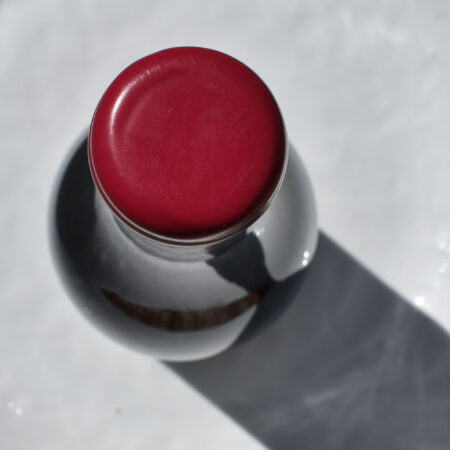
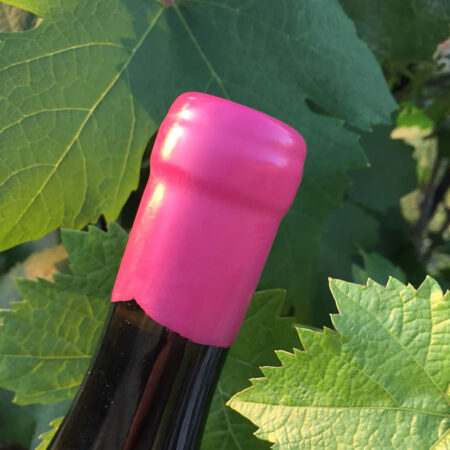
The producer we work with most closely in Marsannay is Domaine Charlopin-Tissier — Yann Charlopin and Justine Tissier, who brought two family vineyard holdings together in 2013. Yann is the son of Philippe Charlopin and was mentored by Jean-Marie Fourrier. The domaine farms organically throughout, fully destemmed, cold maceration, no filtration. The distinctive wax capsule applied by hand to every bottle.
The Charlopin-Tissier Marsannay range is the most complete expression of what this appellation can do at every level — from the village Marsannay Rouge through La Montagne, and Le Chapitre, to the 2019 Clos du Roy in magnum — an older vintage in the format that ages most gracefully, approaching its peak and built to develop through 2035.




What to drink
Village Marsannay Rouge — The approachable, everyday expression of the appellation. Open it tonight with duck, mushrooms, or soft cheeses.
La Montagne — The most aromatic and mineral of the three lieux-dits. Best with lighter dishes — roast chicken, salmon, aged soft cheese.
Le Chapitre — More structured than La Montagne, more complex than the village wine. Duck breast, lamb, aged hard cheeses.
Clos du Roy Magnum 2019 — The most serious wine in the Marsannay range. Decant for at least an hour. Beef, game, aged hard cheeses.
Bourgogne Montre-Cul — The entry point. Open it tonight. Charcuterie, roast chicken, mushroom dishes.
Further reading
About the Côte de Nuits
Domaine Charlopin-Tissier
From Verzy to Gevrey
Yann Charlopin founded Domaine Charlopin-Tissier in 2013 — son of Philippe Charlopin, mentored by Jean-Marie Fourrier. Organic farming, fully destemmed, cold maceration, no filtration. The wines appear on the lists of The French Laundry, Quince, SingleThread, and Les 110 de Taillevent in Paris.