There is a document in the archives of Morey-Saint-Denis that records the birth of Léon Amyot on the 9th of October 1702. His father, Jacques, was a vigneron in the village. That is where the Amiot family tree begins, and it has not left Morey-Saint-Denis since.
The records go back to 1702 — Léon Amyot, vigneron, Morey-Saint-Denis. Ten generations and three centuries later, his descendants are still farming the same hillside.
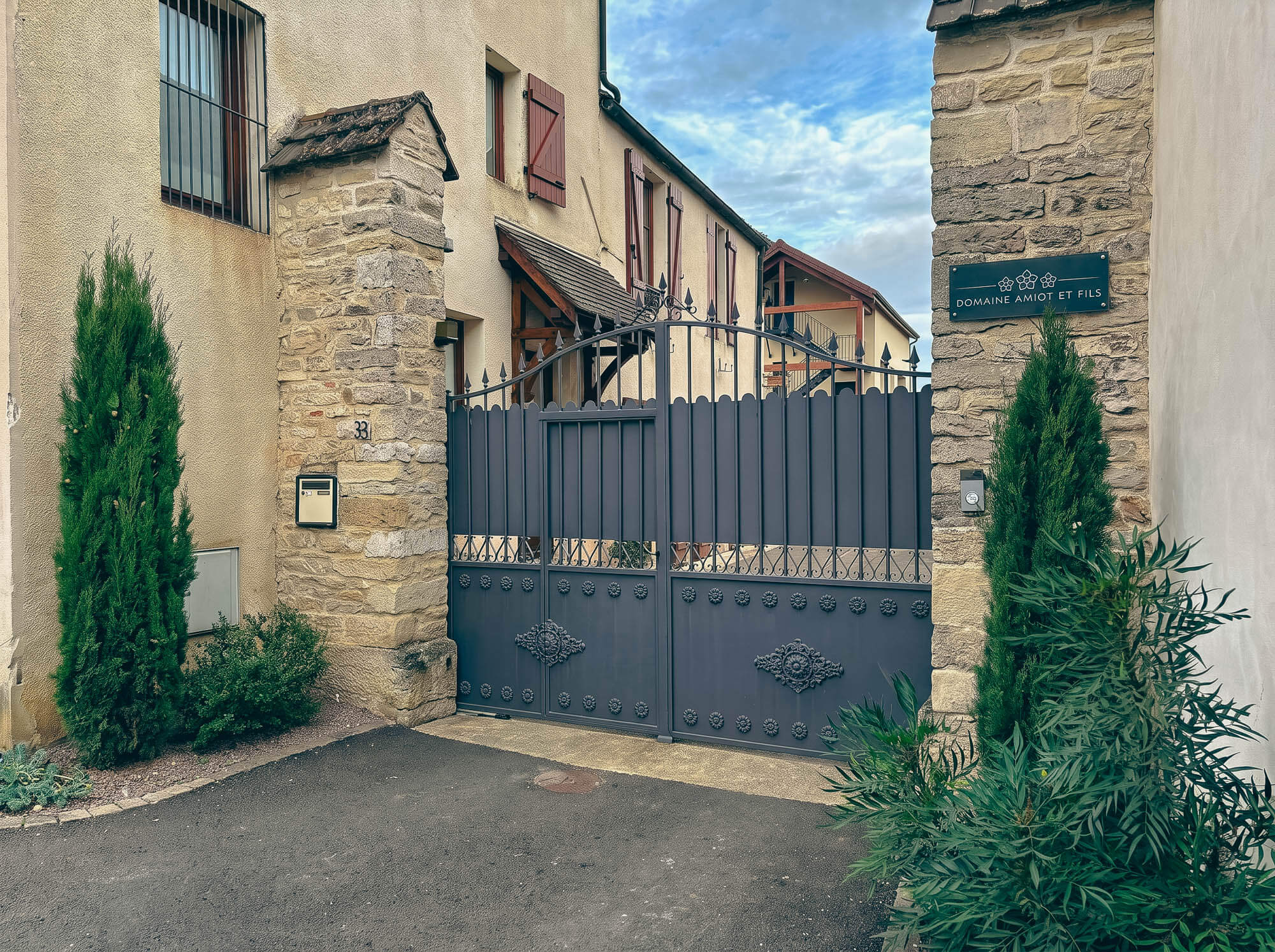
The domaine as it exists today — Domaine Amiot et Fils — was formed in 2020 when Jean-Louis Amiot and his son Léon separated their holdings from the wider family estate and established their own label. It was a new beginning on the foundation of everything that came before. Jean-Louis had spent four decades building the domaine’s reputation, having joined his father Pierre in 1976 at a moment when Pierre was putting the first Amiot bottles on the market. Léon, born in 1995, grew up in the cellar and the vineyard and joined his father in 2020 as the eleventh generation of a family that has never left.
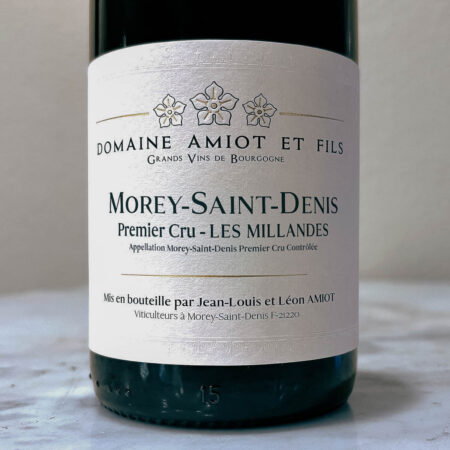
In 2026 the Guide Hachette des Vins — France’s most widely read annual wine guide — named Domaine Amiot et Fils Vigneron de l’Année in Burgundy. Six years after Léon’s first vintage. The recognition was accompanied by a double coup de cœur for the 2023 wines — the Les Millandes Premier Cru and the Clos de la Roche Grand Cru — the highest award the Guide bestows. The 2022 Clos de la Roche had already received three stars and a coup de cœur in the previous edition.
Five hectares. Fourteen appellations.
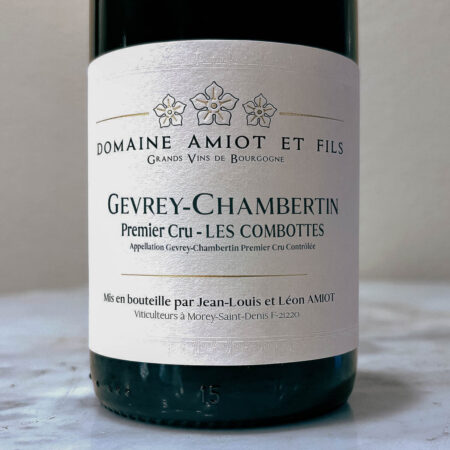
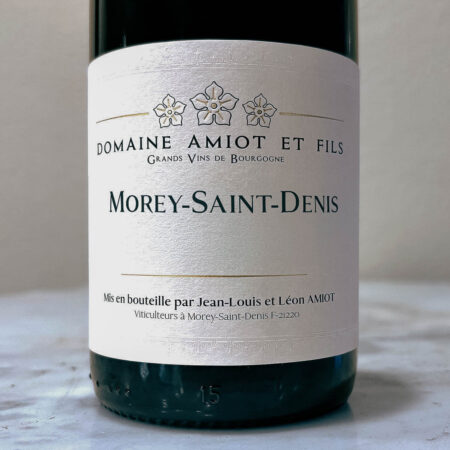
The domaine covers five hectares across Morey-Saint-Denis, Gevrey-Chambertin, and Chambolle-Musigny — from regional Bourgogne through three village wines, five Premier Crus, and two Grand Crus. It is an extraordinary range for such a small holding. Every parcel faces east to southeast at between 220 and 260 metres elevation, on limestone and clay-limestone soils from the Middle Jurassic period. The geological variations between parcels — the depth of the limestone, the proportion of clay, the presence of red silt or small stones — are what make each wine distinct from the next.
The vineyards are farmed sustainably with High Environmental Value (HVE) certification. Léon has been introducing vegetative cover crops in the Clos Solon lieu-dit to maintain moisture in hot summers, and experimenting with natural spreading — bovine and ovine manure — in the Porroux parcel of the village Morey-Saint-Denis. Experiments in agroforestry and biodynamics are ongoing. Guyot-Poussard pruning throughout — the system that respects the natural sap flow of the vine and reduces the risk of wood disease that is devastating older vineyards across Burgundy.
In the cellar: hand-harvested in small perforated crates, sorted on a vibrating table. Destemming between 60 and 100% depending on the vintage. Cold maceration, slow extraction, indigenous yeasts. Sixteen to eighteen months in oak barrels with 30 to 50% new oak. Racking and bottling timed to the lunar calendar. The approach is deliberate and consistent — neither heavy-handed nor interventionist.
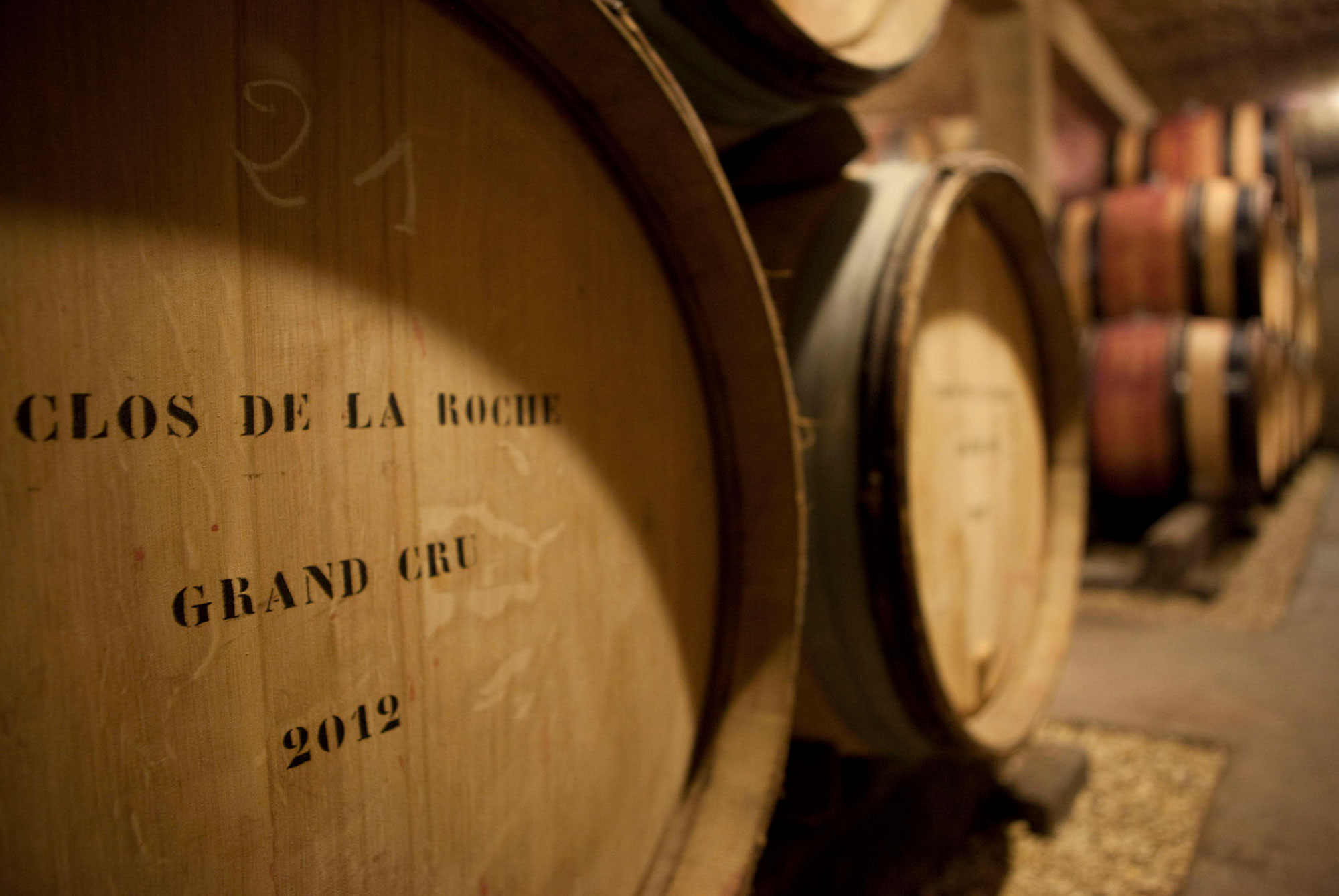
2012 Clos de la Roche Grand Cru — Domaine Amiot et Fils, Morey-Saint-Denis. Eleven generations of the Amiot family have been making wine in this village since 1702.
The Clos de la Roche
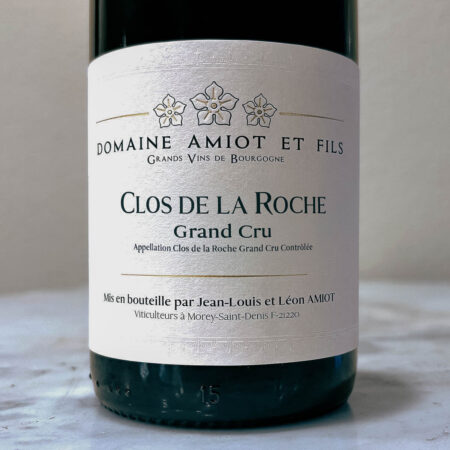
The flagship is the Grand Cru Clos de la Roche — the largest Grand Cru in Morey-Saint-Denis, a 16-hectare enclosure at the northern end of the village. The Amiot parcel spans 56 ares across three distinct sites within the clos: Monts Luisants at the top of the slope, Fremières mid-slope, and Les Chabiots at the bottom. Three different elevations, three different soil expressions, all within one Grand Cru. The Clos de la Roche has been in the Amiot family for at least four generations.
The Guide Hachette described the 2022: “Its ample, rich, vigorous substance — perfectly balanced from beginning to end — a complete, capital wine, and definitively one for long ageing.” Three stars. Coup de cœur. Drink from 2030 through 2040.
The 2021 is a different wine — Jean-Louis Amiot described it as showing the best terroir transparency in several years. Leaner, more precise, built for a longer arc. Two vintages of the same parcel, the same family, the same three-parcel complexity — different expressions of the terroir. That is what makes having both available at the same time interesting.
”Its ample, rich, vigorous substance — perfectly balanced from beginning to end — a complete, capital wine, and definitively one for long ageing.
Guide Hachette des Vins · 3 Stars + Coup de Cœur · 2022 Clos de la Roche
Sans varier
The three roses on every Amiot label carry a motto — Sans varier — from the Counts of Vergy, whose ancestral domain included these hillsides centuries before the appellation system existed. To continue without varying. To be faithful to the terroir year after year, whatever the vintage brings.
Jean-Louis described it simply: wines that are faithful to their origin. That is the statement Léon inherited with the vineyards, the cellar, and the family name. Léon is six years into his first chapter. The wines suggest he knows exactly what he’s doing.