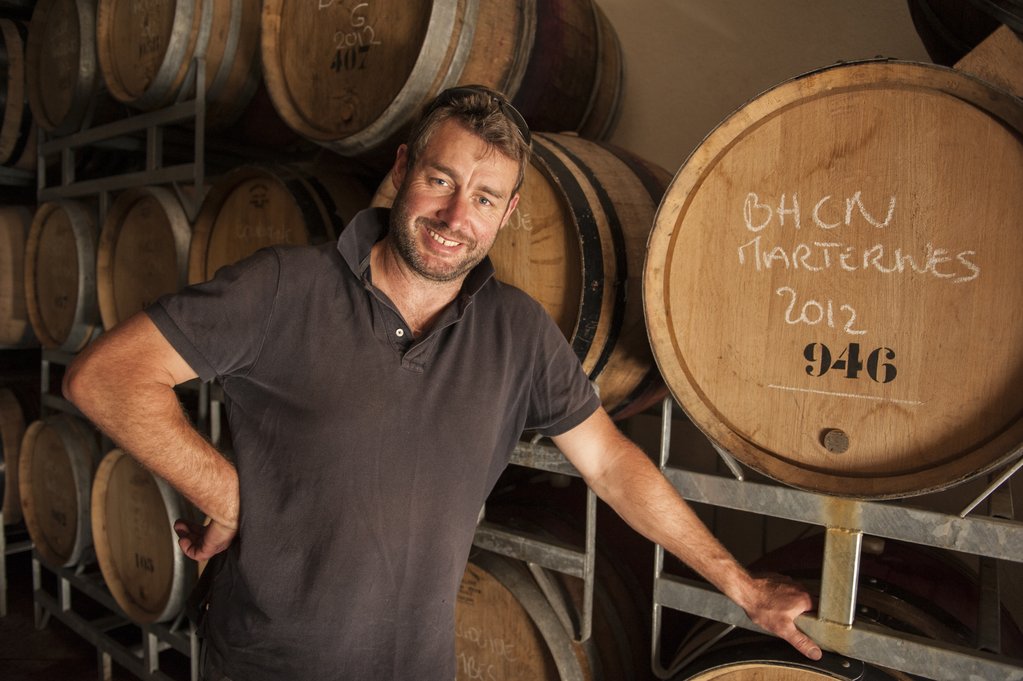
In Burgundy, where families have farmed the same plots for generations and a surname carries more weight than any credential, Mark Haisma arrived in 2007 with none of the things the region demands. No inherited vines. No family cellar. No Burgundian name. An Australian accent, a French mother, and a decade of experience in the Yarra Valley.
Eighteen years later, Jancis Robinson has written that he has “struck gold.” Tim Atkin named him one of his Top 25 Producers to Watch. 12,000 bottles of annual production.
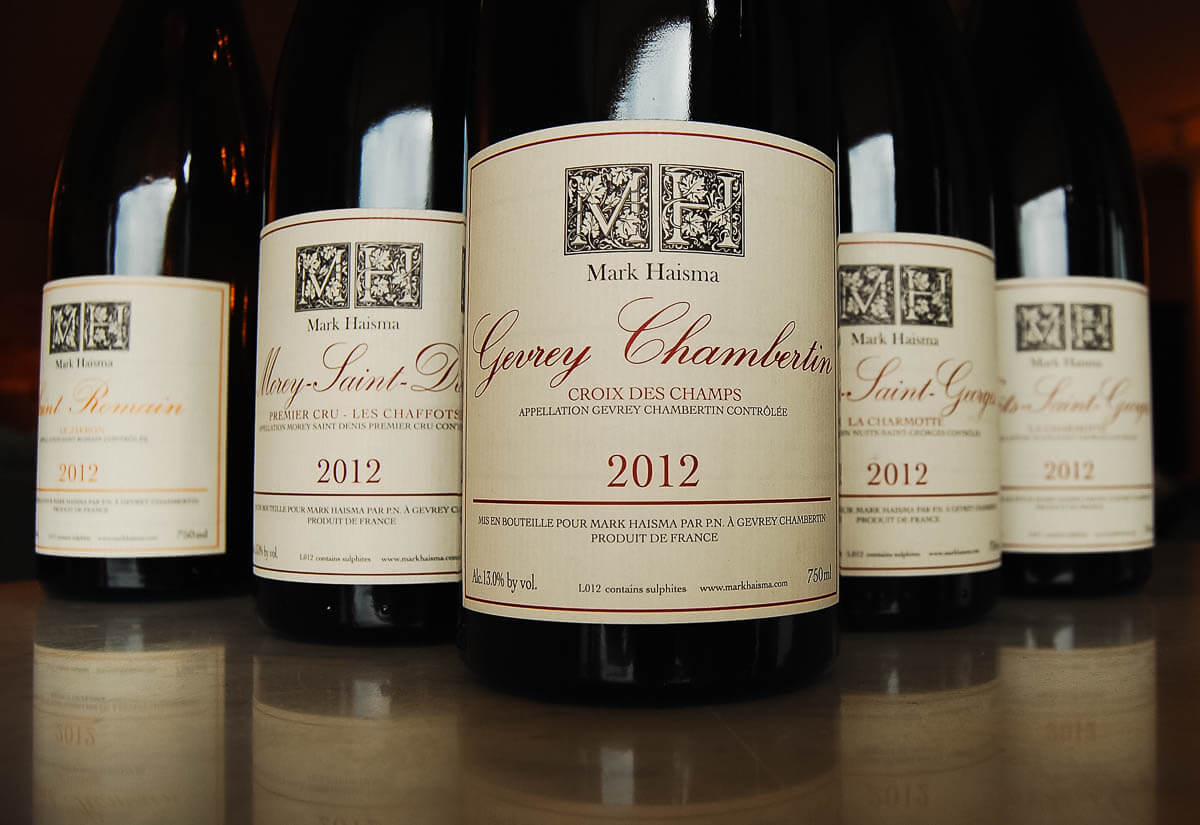
Early vintages from Mark Haisma. He has been making wine in Gevrey-Chambertin since 2007.
Before Burgundy
Mark spent a decade as winemaker at Yarra Yering in Victoria under Dr Bailey Carrodus — one of Australia’s most revered winemakers and a scientist who approached viticulture with the same rigour he’d applied to his Oxford doctorate in plant physiology. “He took a bad boy under his wing and gave him an opportunity,” Mark has said. The education covered an unusually broad range of varieties and climates — preparation for what came next.
When Carrodus died in 2008, Mark was already in France. He’d arrived in 2007 knowing one Gevrey-Chambertin winemaker he’d met in Australia. One night, over a beer, Mark confided that he’d love to make wine. So he came over and did the harvest. He bought some of that wine, labelled it himself, and did more and more of the work himself each year.
Making wine in Gevrey-Chambertin
He started with no vines and had to build every relationship with growers from scratch — earning access to fruit through trust, consistent work, and visibly better farming. As of 2019 he has been working with his growers to convert their vineyards to organic agriculture — a genuine conviction about fruit quality.
The vineyards
Building a range in Burgundy without inheriting vineyards requires a different kind of patience. Every parcel Mark works with has been earned through personal connection, consistent presence, and — most importantly — demonstrably better farming. Over nearly two decades he has assembled a range that spans both Côtes and reaches into the Northern Rhône, returning to the same specific plots year after year.
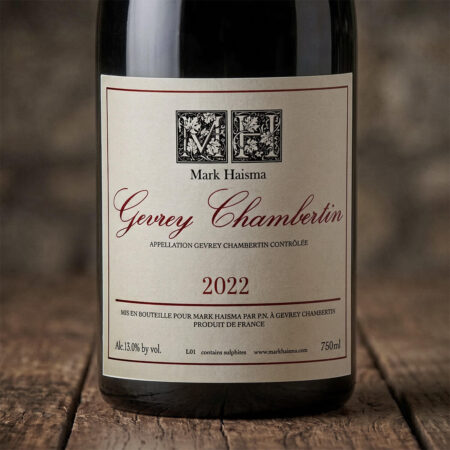
The village Gevrey-Chambertin is blended from multiple parcels across the appellation to build complexity. 50–60% whole cluster, no new oak, made for drinking sooner than most Gevrey. The wine that first established his reputation and the one he keeps returning to as the clearest expression of what he does.
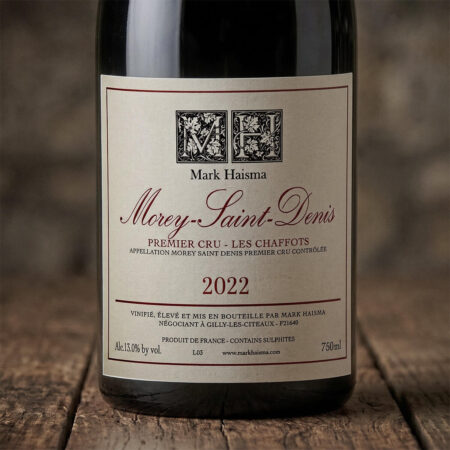
Les Chaffots in Morey-Saint-Denis is his Premier Cru benchmark — a vineyard he has sourced consistently and the wine that most clearly shows what whole cluster fermentation achieves at a higher level of concentration. Up to 75% whole clusters. Power and grace in equal measure, with great depth.
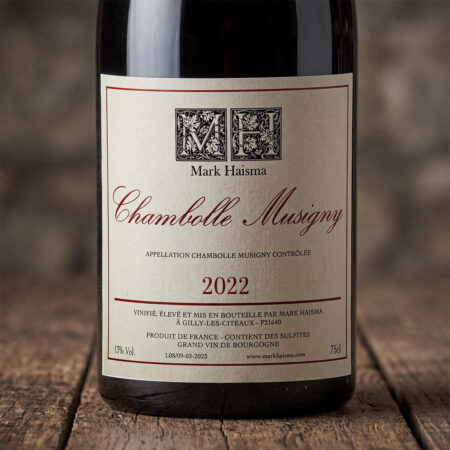
Chambolle-Musigny — the village whose limestone soils and active chalk produce some of the most perfumed and fine-grained Pinot Noir on the Côte de Nuits. Mark’s Chambolle is the most delicate wine in the range — lighter in colour, more aromatic, the one that most clearly demonstrates his pursuit of freshness and lift.
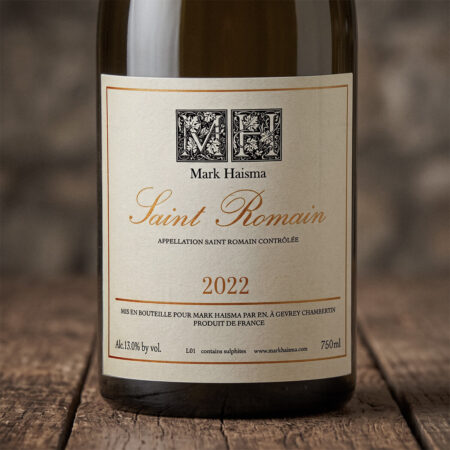
Saint-Romain Le Jarron is the white — Chardonnay from a valley village behind the main Côte de Beaune slope, at higher elevation and cooler temperatures than Meursault or Puligny. The Le Jarron lieu-dit is a steep, very rocky slope that the sun reflects off intensely off the stones. It produces a white of real mineral precision — aged in 2,500-litre barrels that add texture without oak flavour. The wine Jancis Robinson described as one of his most compelling.
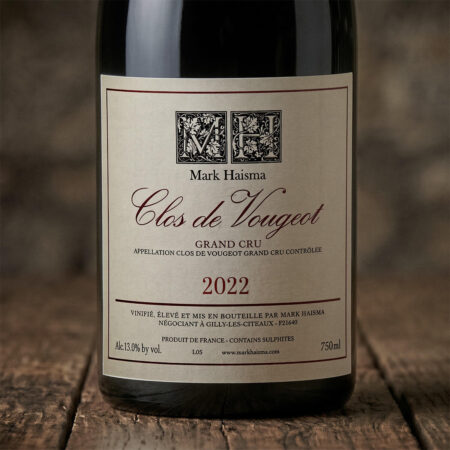
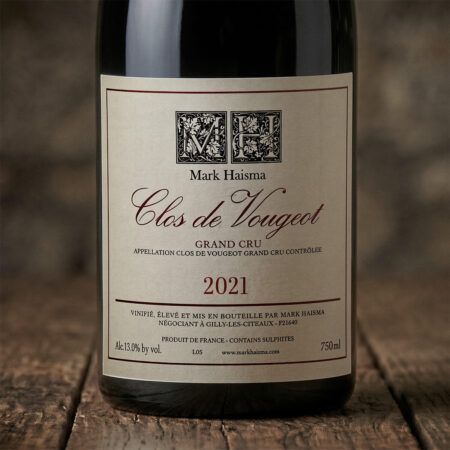
And at the summit: Clos Vougeot Grand Cru — the 50-hectare medieval enclosure built by Cistercian monks in the 12th century, now divided among more than 80 owners. Mark’s parcel sits in the upper section of the clos, where better drainage and stonier soils produce the most concentrated and structured fruit. Eighteen months in barrel. The wine that most rewards patience — and the one that most clearly answers the question of whether an outsider with no Burgundian name can make serious Grand Cru. The answer, based on the evidence so far, is yes.
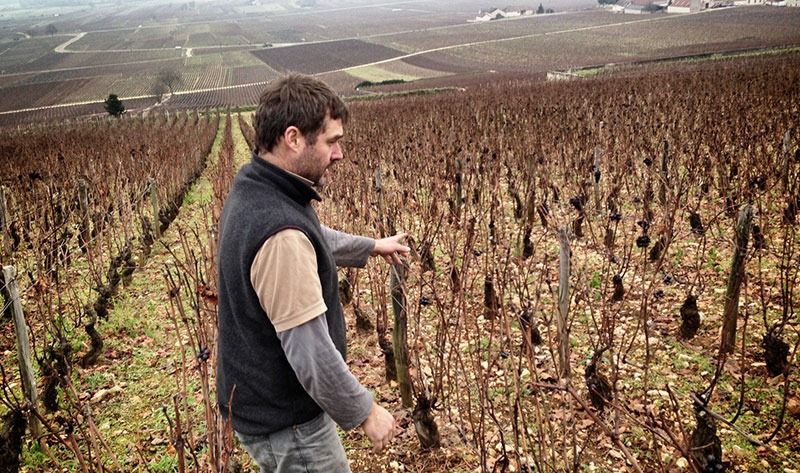
Mark Haisma in the Les Chaffots vineyard — Premier Cru Morey-Saint-Denis. Up to 75% whole cluster fermentation. The parcel that most clearly shows what his approach produces at Premier Cru level.
The philosophy
“My winemaking has always sought to capture freshness and play on the aromatics of the grapes I work with. Power, structure, indefinite ageing, black colours are not my thing.”
He picks on lift and aromatics rather than alcohol — on pH and acidity rather than sugar accumulation. Whole cluster fermentation — including grape stems in the fermentation vessel — is central to the approach: “a great way to build complexity and savory characters, and still keep a lush creamy feel to the palate.” The proportion varies by wine and vintage — 50% in the village Gevrey-Chambertin, up to 75% in Les Chaffots Premier Cru in Morey-Saint-Denis.
The result, in Robinson’s words: wines with “an excellent balance between fruit, expression and refreshment without being in any way wimpish — and, appetisingly, bone dry.”
Cornas — and Shiraz in Burgundy
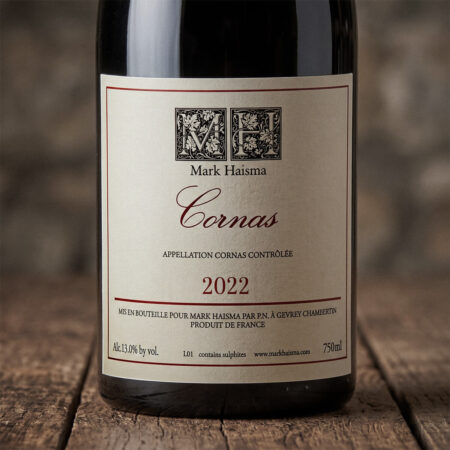
Bailey Carrodus loved Shiraz, and Mark’s love for the grape was born at Yarra Yering. When he arrived in France he immediately sourced Cornas fruit from the Northern Rhône — Syrah on granite, made in the same Le Shed cellar as the Burgundy wines. Two vintages are available at Amitié.
He has pushed this further still — planting 0.3 hectares of Shiraz in the Mâconnais in 2016, partly from emotional pull to the variety and partly for the pure excitement of going against the grain. It is also a climate experiment: the Shiraz he is making in Burgundy today achieves the alcohol levels of wine being made in the Northern Rhône decades ago.
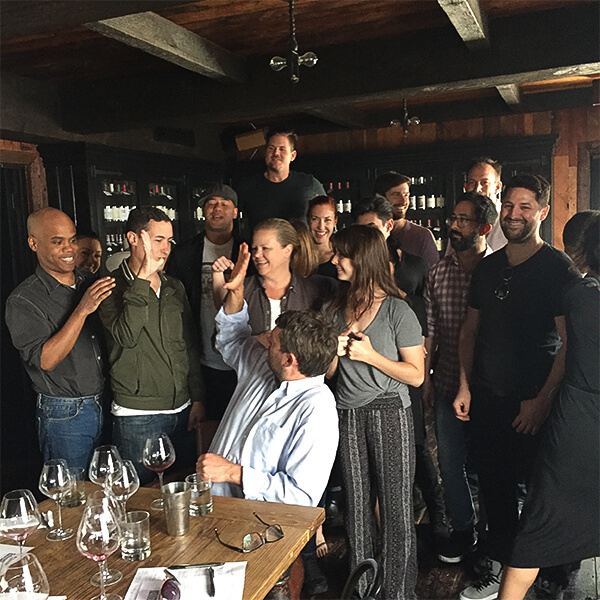
Mark Haisma at a staff training in Los Angeles — his wines have been on the lists of Michelin-starred restaurants throughout California since the early 2010s.
The wines
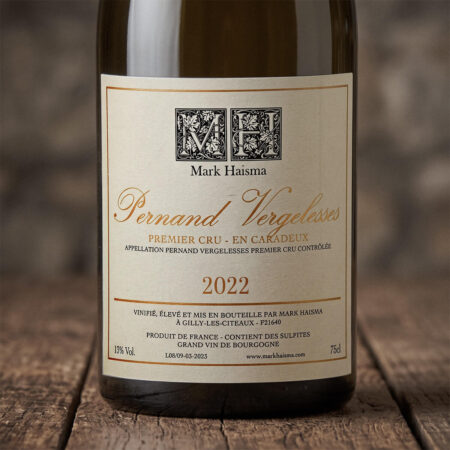
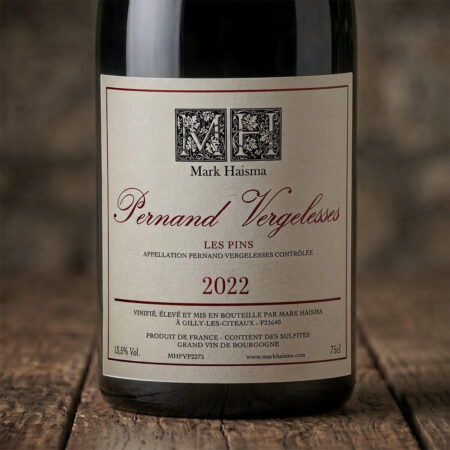
We visit Mark annually and taste through the range from barrel. The current selection spans village Gevrey-Chambertin through Grand Cru Clos Vougeot, alongside Pernand-Vergelesses, Saint-Romain, Chambolle-Musigny, and Cornas.
Full producer profile
About the Côte de Nuits
Where to start