Description
The wine
The Côte des Blancs — Cramant, Avize, Oger, Le Mesnil — is where most serious Champagne Blanc de Blancs comes from. The chalky soils give Chardonnay its hallmark freshness, precision, and mineral drive. Verzy, on the opposite side of the Montagne de Reims, is planted almost entirely to Pinot Noir. Chardonnay here is relatively rare.
Alban Corbeaux chose to make a Blanc de Blancs anyway. The chalk beneath Verzy’s clay-limestone soils is the same fundamental geology as the Côte des Blancs — but the aspect is different, the microclimate is cooler, and the surrounding predominance of Pinot Noir gives the site a different character. Chardonnay from Verzy is tighter and more structured than from the classic Blanc de Blancs villages — more mineral tension, less opulent fruit.
The 2020 Copin Blanc de Blancs comes from two named lieu-dits within Verzy Grand Cru:
Les Épinettes — planted 1970
Les Alouettes — planted 1976
Both plots farmed organically with biodynamic practices. Fermented entirely in old oak barrels — no stainless steel — with indigenous yeasts and full malolactic fermentation. Extra brut. 1,300 bottles made.
The 2021 vintage is also available — a leaner, more taut expression of the same parcels in a more challenging year.
Vineyard & vintage details
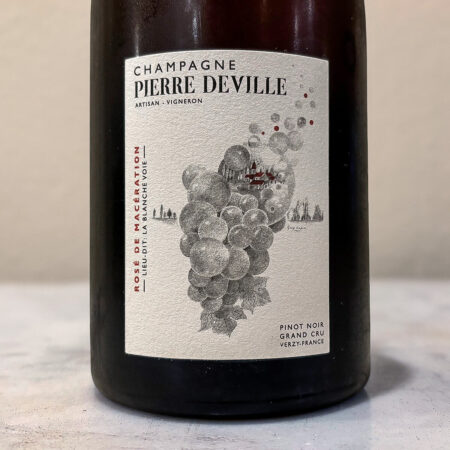
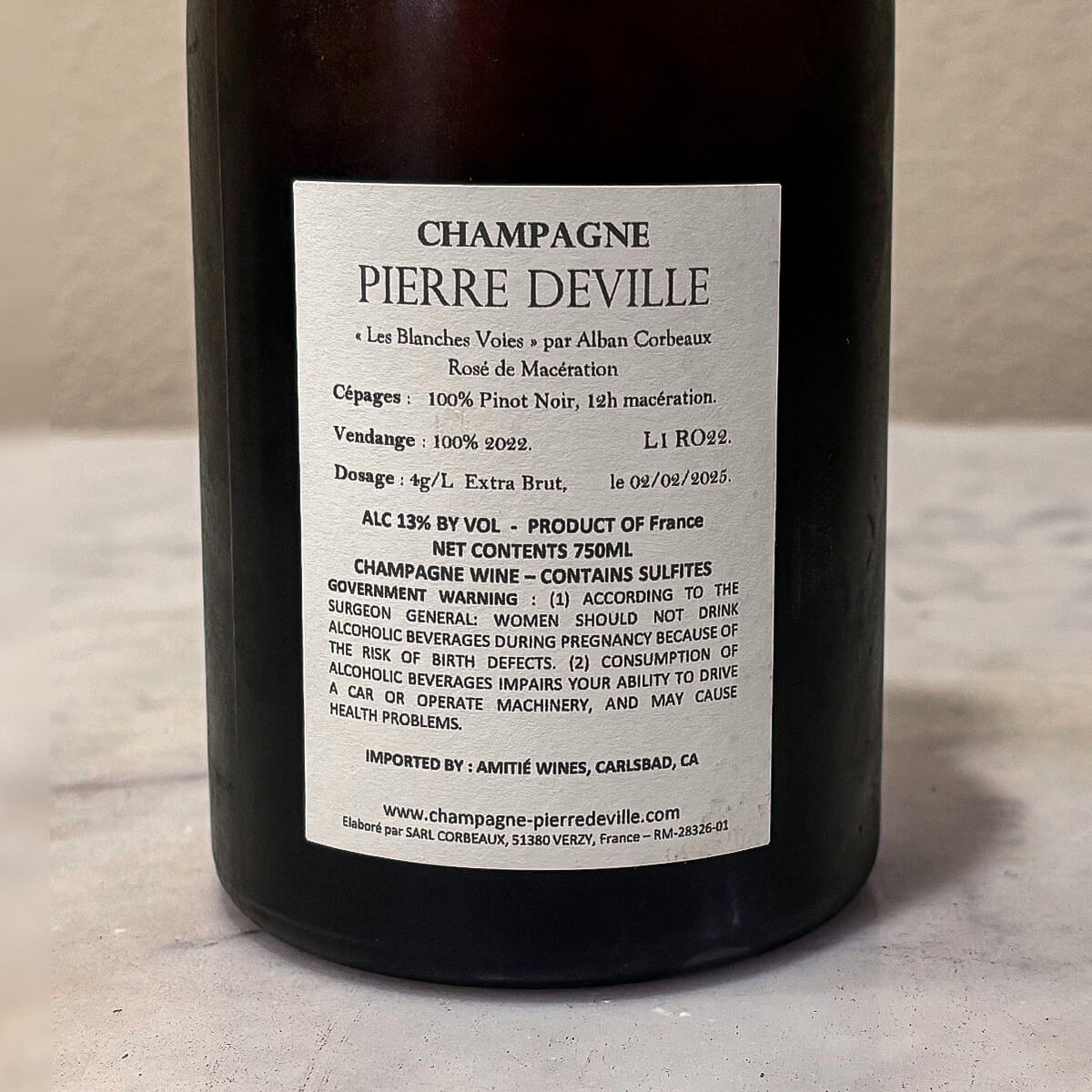
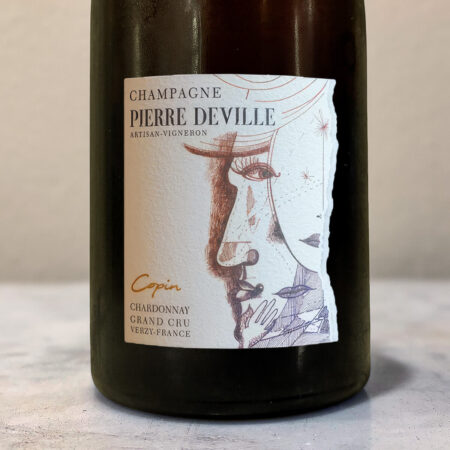
Producer: Champagne Pierre Deville
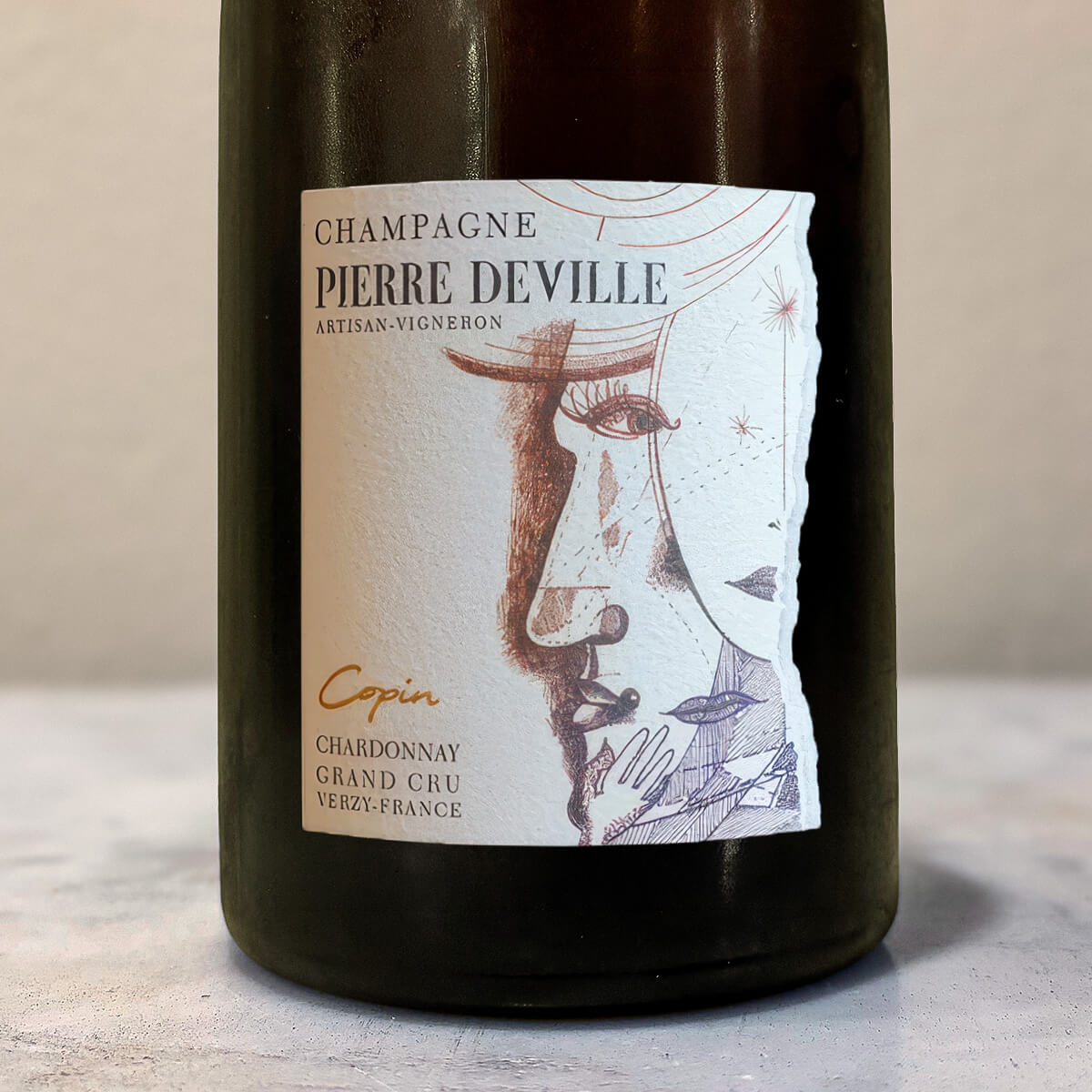
Cuvée: ‘Copin’ Blanc de Blancs Extra Brut
Terroir: 100% Verzy Grand Cru
Grape: 100% Chardonnay
Vintage: 2020
Lieu-dits: Les Épinettes (1970) · Les Alouettes (1976)
Soil: Chalk-limestone
Farming: Organic · biodynamic practices
Vinification: 100% old oak barrel fermentation · indigenous yeasts · full malolactic fermentation
Dosage: Extra Brut
Production: 1,300 bottles
2020 vintage note
2020 was a warm, generous vintage across Champagne — excellent growing conditions, natural ripeness, and good concentration. For Chardonnay in Grand Cru Verzy, the vintage adds weight and a richness of fruit that the cooler 2021 doesn’t have. The old oak ageing integrates beautifully with the vintage’s natural generosity. More immediately approachable than the 2021 and drinking well now — with the concentration to continue developing over the next four to five years.
Tasting notes
White peach, ripe lemon, honeysuckle, and a hint of brioche from the oak ageing. The palate has more generosity and texture than the 2021 — the vintage’s warmth is evident — but the chalk soils of Verzy keep it focused and the extra brut dosage keeps it dry. Long, clean finish with a mineral quality that anchors the riper fruit. Drink now through 2029.
Service: 10–12°C. Roast chicken, grilled fish, white truffle dishes, aged Comté. Works equally well as an aperitif or at the table.