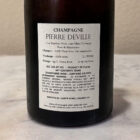
Description
The wine
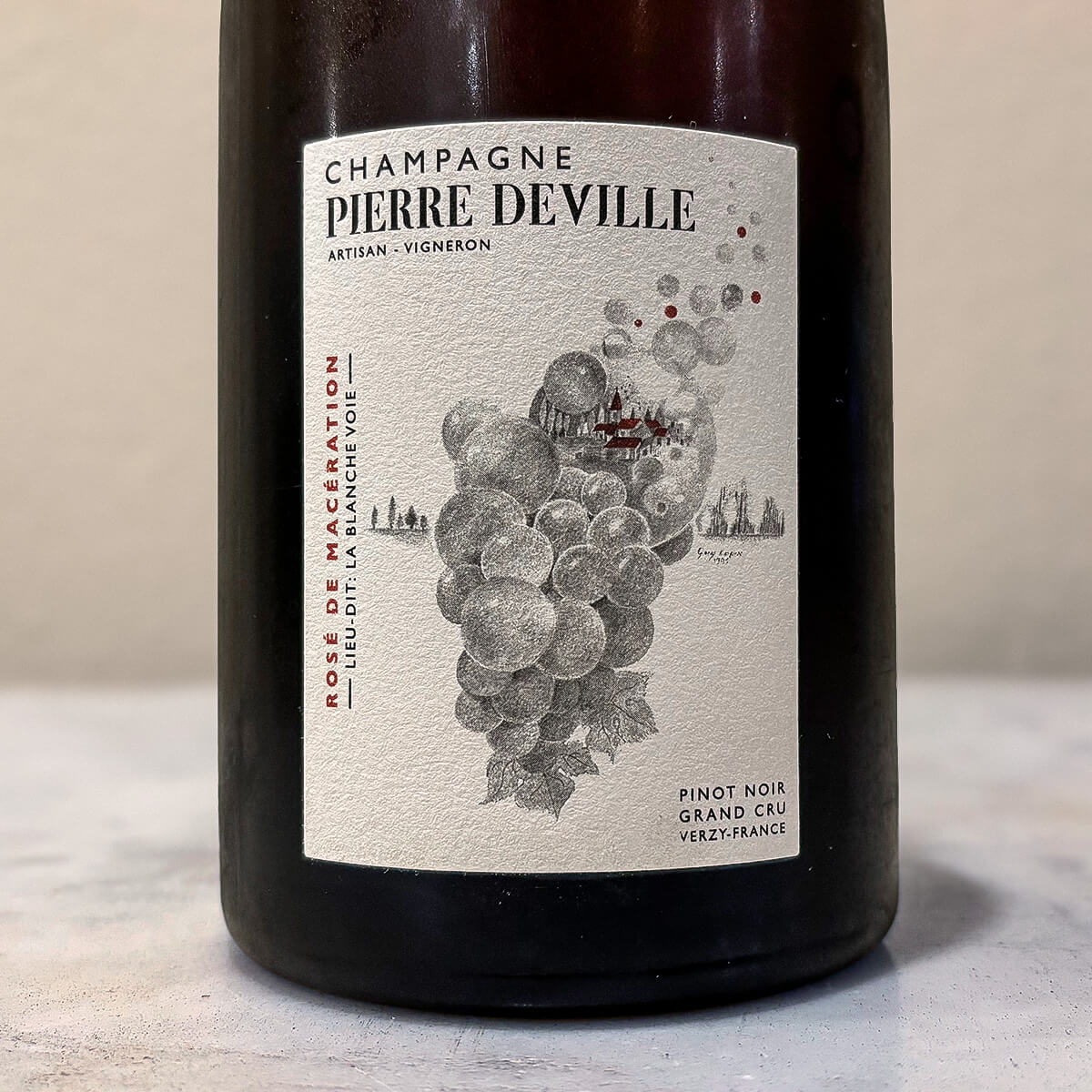
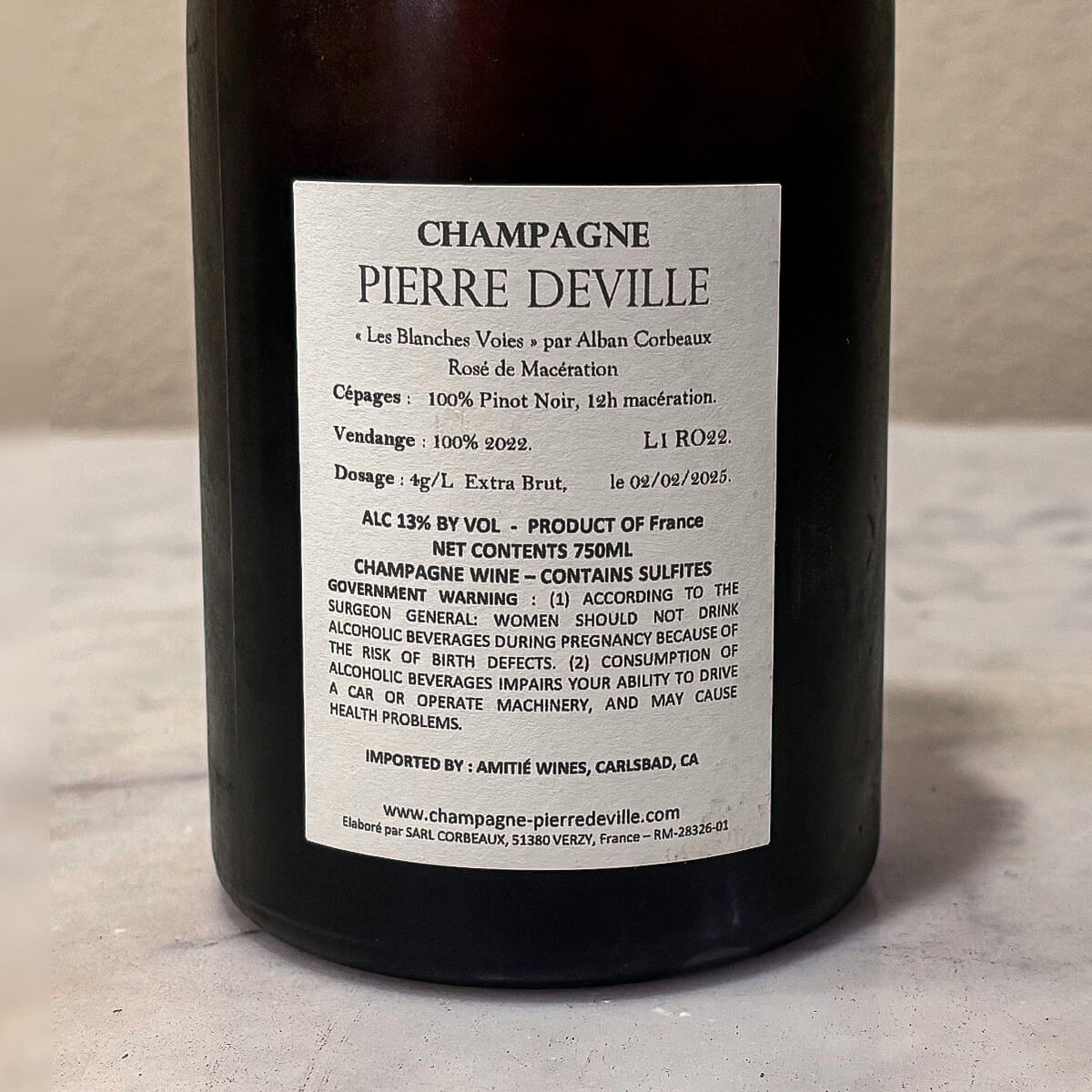
The Rosé de Macération is made entirely from Pinot Noir grown on a single parcel — La Blanche Voie in Verzy Grand Cru, vines planted in 1968. Rather than blending in still red wine, winemaker Alban Corbeaux macerates the Pinot Noir on its skins for twelve hours after harvest, extracting colour, texture, and tannin directly from the fruit before pressing. The juice then goes entirely into old oak barrels for fermentation with indigenous yeasts and full malolactic fermentation — no stainless steel involvement at any stage.
The result is a Champagne rosé with real structure. The skin contact gives it grip and texture that most Champagne rosé doesn’t have. The old oak ageing adds depth without imposing flavour. The chalk-limestone soils of Verzy keep it tense and mineral throughout. Extra brut dosage lets the fruit and terroir do the work.
Vineyard & vintage details
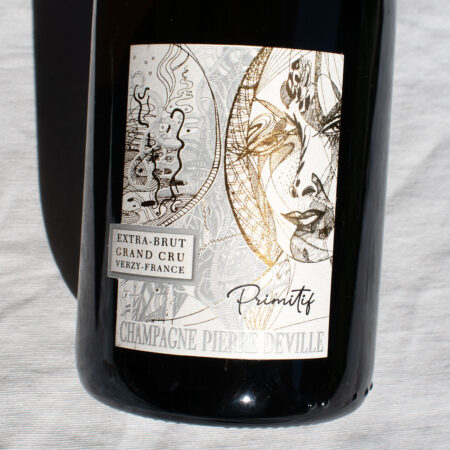
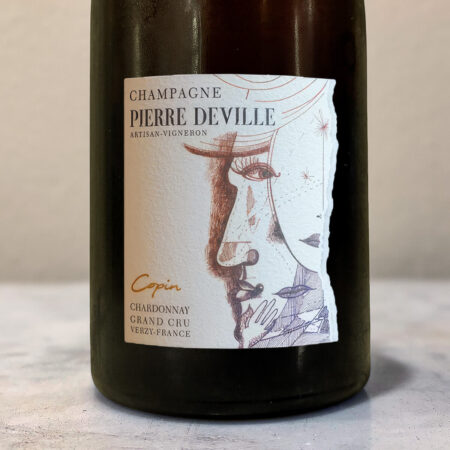
Producer: Champagne Pierre Deville
Cuvée: Rosé de Macération Extra Brut
Terroir: Verzy Grand Cru
Parcel: La Blanche Voie
Grape: 100% Pinot Noir
Vine age: Planted 1968
Soil: Chalk-limestone
Farming: Organic · biodynamic practices
Vinification: 12-hour skin maceration · pressed · 100% old oak barrel fermentation · indigenous yeasts · full malolactic fermentation
Dosage: Extra Brut
Tasting notes
Salmon pink with a fine, persistent mousse. Wild strawberry, red currant, dried rose petal, and a hint of spice from the barrel aging. The palate has more texture and structure than the colour suggests — the skin maceration gives it grip, the oak gives it depth, and the Verzy chalk gives it the mineral tension that runs through everything Alban makes. Long, dry, precise finish. Drink now through 2029.
Service: 10–12°C. Salmon, tuna tartare, roasted duck breast, aged soft cheeses. Works equally well as an aperitif or through a meal.
Alban Corbeaux is the fourth generation of the Corbeaux-Deville family farming in Verzy Grand Cru since 1963. Trained in Burgundy before returning to take over the domaine in 2017 — biodynamic farming, indigenous yeasts, zero or low dosage. Five hectares in one of the Montagne de Reims’ most distinctive Grand Cru villages.